PVA
Others
PVA (Polyvinyl Alcohol) is a water-soluble thermoplastic widely used in FDM 3D printing as a dissolvable support material. Its key advantage is the ability to fully dissolve in water, allowing intricate part features such as internal channels, undercuts, thin structures, and complex overhangs to be produced with ease. PVA adheres well to common build materials such as PLA (and in some cases PETG or nylon blends, depending on formulation), making it effective for systems that rely on soluble support strategies. Once printing is complete, the support structure is removed by submerging the part in water, leaving a clean surface finish and preserving fine details without mechanical removal. PVA itself is not typically used as a structural material due to its low mechanical strength and sensitivity to moisture, but as a soluble support it significantly expands the geometric freedom of FDM printing, making it valuable for engineering prototypes, functional assemblies, and complex hobbyist models alike.
Available finishes
Each finish can be combined with the available colors at checkout.

Standard
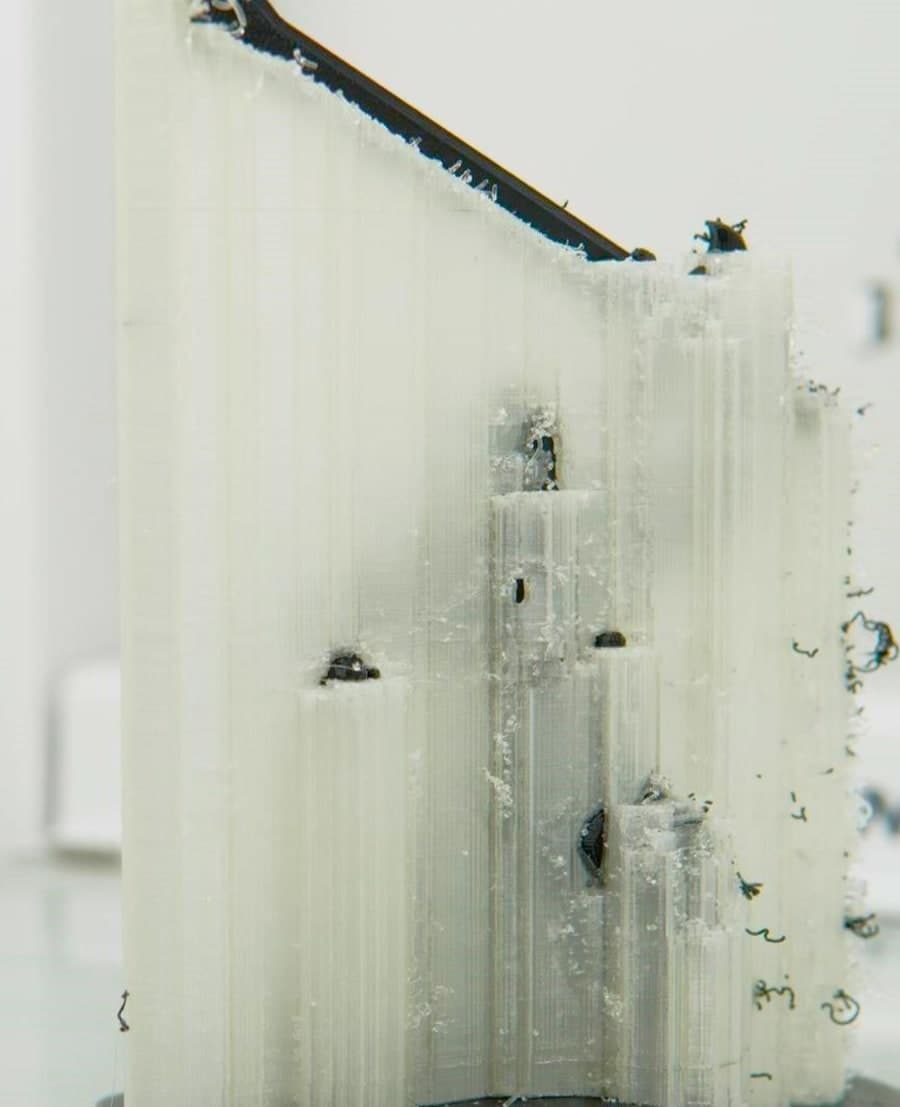
1 colorStandard FDM PVA prints feature a matte, off-white surface with visible layer lines. The material is water-soluble and primarily used as dissolvable support for complex geometries.