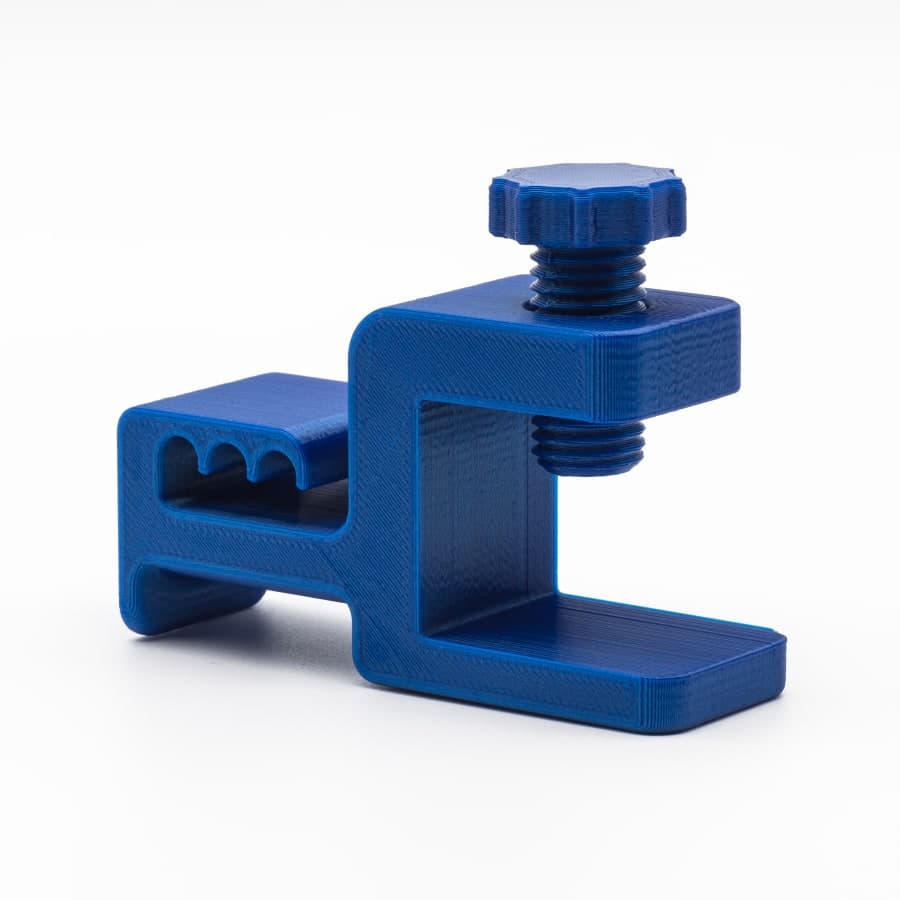
Polycarbonate
Engineering Plastics
Impact resistantFunctionalHeat resistantWater resistant
Polycarbonate (PC) is an engineering-grade thermoplastic that outperforms standard FDM materials on both heat resistance and impact strength. It holds its shape up to around 150 °C, well above ABS's roughly 105 °C, PETG's roughly 80 °C, and PLA's roughly 60 °C, while also resisting impact and fracture better than ABS. It's naturally transparent and resists many oils, acids, and alkalis. Without UV stabilization, PC can gradually yellow under prolonged direct sunlight, similar to ABS, so for long-term outdoor use, ASA remains the better fit. It's also not ideal for parts under continuous repeated flexing, where fatigue can lead to stress cracking over time. PC suits functional prototypes, jigs and fixtures, protective covers, and parts that need to withstand both heat and impact.
Available finishes
Each finish can be combined with the available colors at checkout.

Standard
12 colorsThe standard (as-printed) finish on FDM parts shows the natural texture of layer-by-layer printing. The visibility of the layer lines depends on part geometry and orientation, plus light marks where support material was removed.

Sanded
12 colorsThe sanded finish on FDM parts reduces the visibility of layer lines compared to the standard finish, though some surface texture generally remains. How much smoothness is achieved can vary depending on the material.