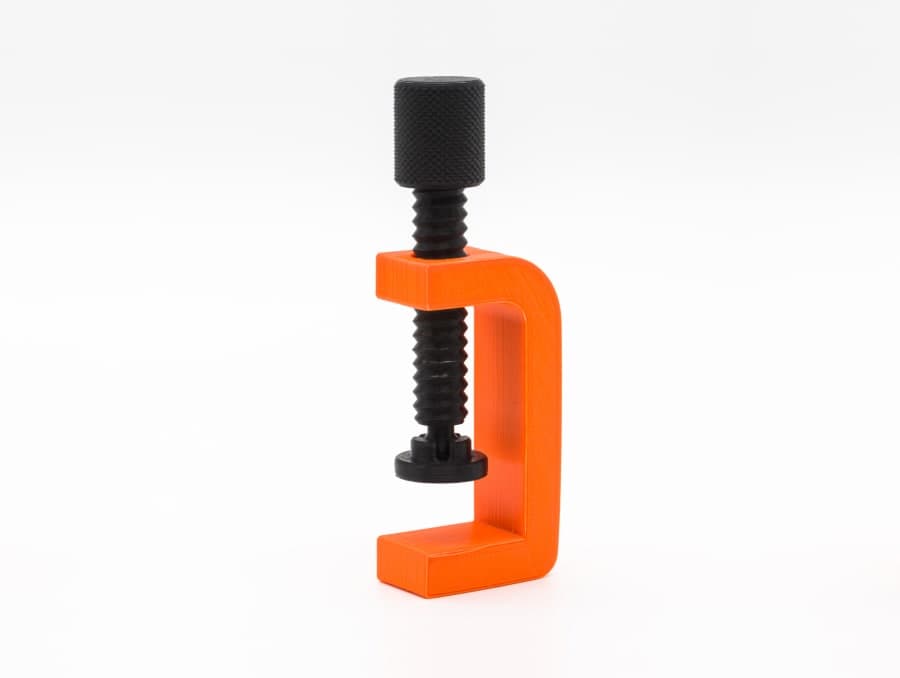
PETG
Standard Plastics
Chemical resistantFunctionalStrongWater resistant
PETG is made by modifying polyethylene terephthalate (PET) with glycol, which makes it notably more impact-resistant while avoiding the brittleness that can affect standard PET. Compared to PLA, PETG offers greater durability and flexibility, which makes it the better choice for parts that need to withstand everyday handling, stress, or impact. It also holds up well against moisture and many common chemicals. PETG suits moderate outdoor or shaded use, but prolonged direct sun exposure can cause gradual yellowing; for parts that need long-term UV durability, ASA would be the better fit. PETG is a good choice for protective enclosures, storage containers, and mounting brackets.
Available finishes
Each finish can be combined with the available colors at checkout.

Standard
60 colorsThe standard (as-printed) finish on FDM parts shows the natural texture of layer-by-layer printing. The visibility of the layer lines depends on part geometry and orientation, plus light marks where support material was removed.

Sanded
60 colorsThe sanded finish on FDM parts reduces the visibility of layer lines compared to the standard finish, though some surface texture generally remains. How much smoothness is achieved can vary depending on the material.