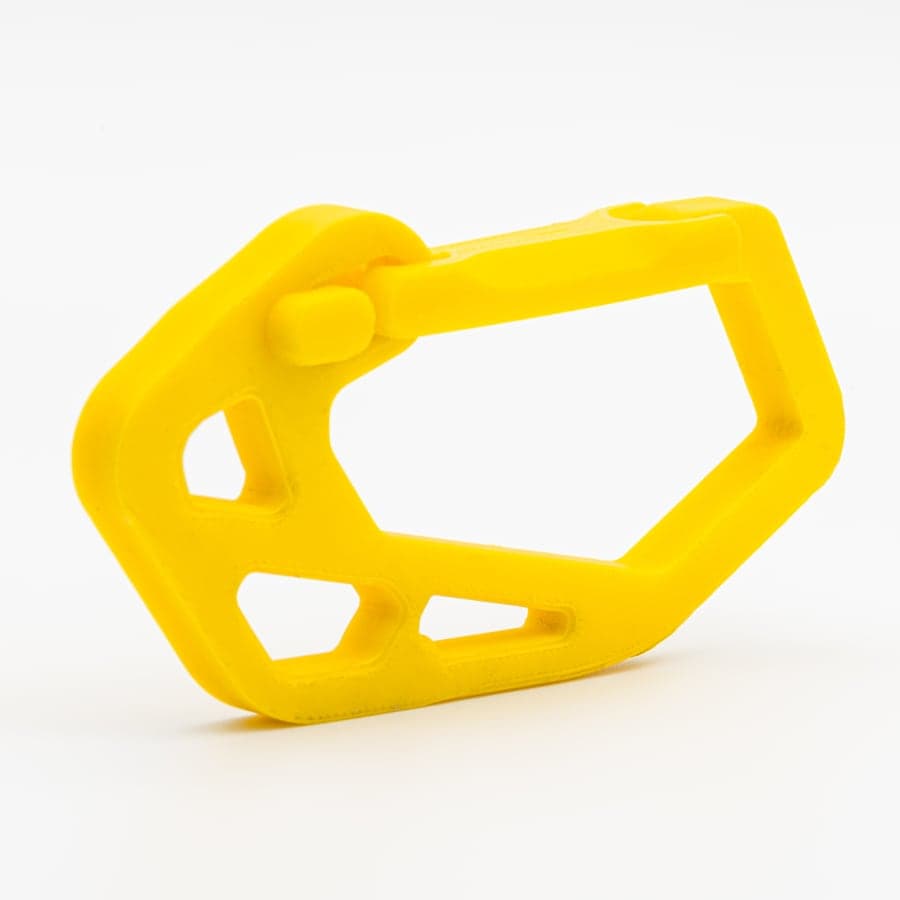
FDM Nylon
Nylons
FunctionalStrongHeat resistantImpact resistant
FDM nylon – most commonly PA12 for 3D printing – is valued for excellent impact resistance, low friction, and outstanding wear resistance, which makes it a strong choice for parts that experience repeated motion or friction. It can flex and bend significantly before breaking, therefore suiting snap-fits, living hinges, and other parts that need some give under stress. It also resists many oils, fuels, and solvents, though strong acids can degrade it over time. Like other nylons, it absorbs some moisture from the air, which can gradually affect dimensional stability and mechanical properties, though PA12 specifically absorbs much less moisture than other nylon types like PA6. FDM nylon suits gears, bearings, bushings, hinges, and functional parts that need to withstand friction, motion, and repeated stress.
Available finishes
Each finish can be combined with the available colors at checkout.

Standard
12 colorsThe standard (as-printed) finish on FDM parts shows the natural texture of layer-by-layer printing. The visibility of the layer lines depends on part geometry and orientation, plus light marks where support material was removed.

Sanded
12 colorsThe sanded finish on FDM parts reduces the visibility of layer lines compared to the standard finish, though some surface texture generally remains. How much smoothness is achieved can vary depending on the material.